

Government Will Force You to Own an Electric Car!
Will the government force you to own an electric car? In this article, we explain how taxes, circulation rules, and incentives can make combustion vehicles increasingly expensive and EVs the most rational choice.
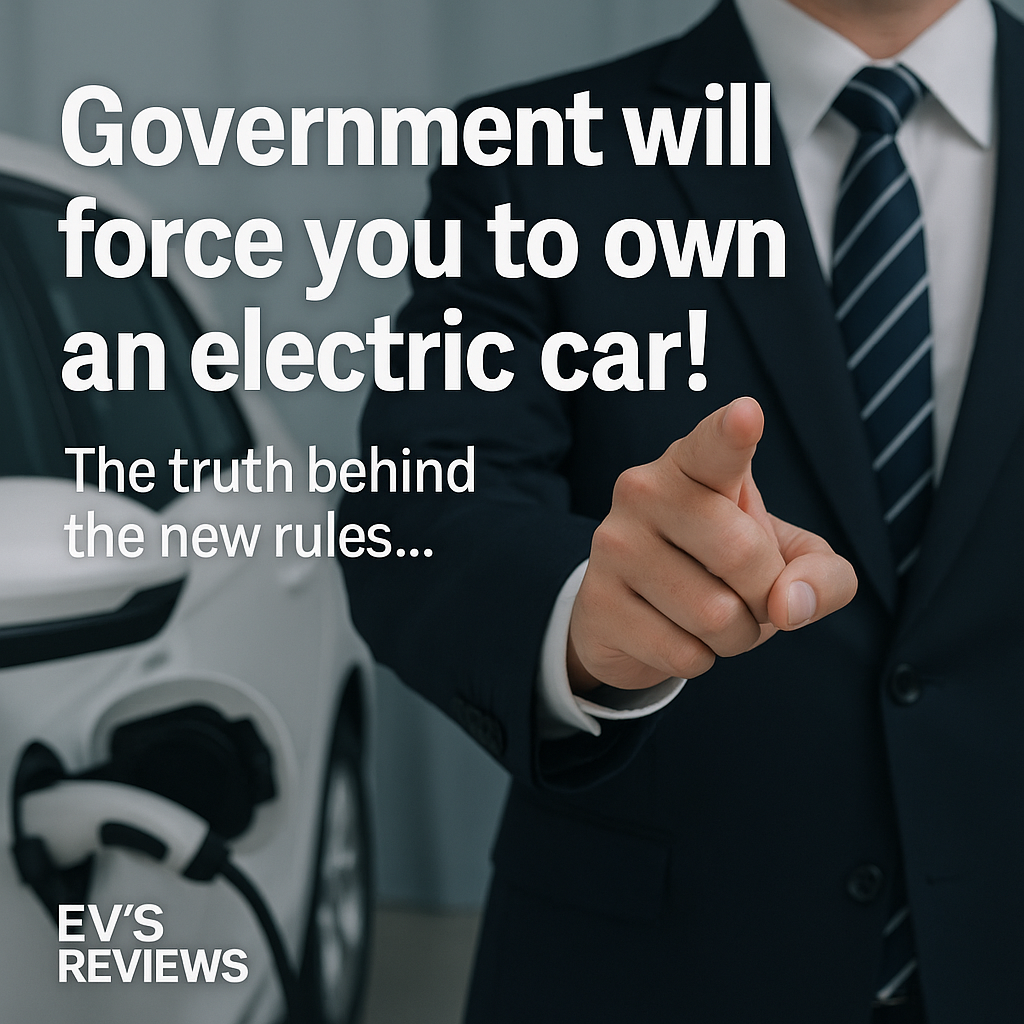
Government Will Force You to Own an Electric Car?
The truth behind the new rules…
The sentence is scary, right? “The government is going to force you to own an electric car.”
It sounds like a dystopian movie: someone knocks on your door, confiscates your gasoline car and leaves an EV in your garage with a 200-page manual. But, like almost everything in public policy, reality is less dramatic… and much more strategic.
The right question is not “are they going to force me to have an electric car?”, but:
In what ways can the government make combustion so disadvantageous that an EV becomes the only rational choice?
That is where the real change lives.
The fear doesn’t come from nowhere: what’s already happening abroad
Before looking at Brazil, it’s worth understanding where this feeling of “they’re going to force me” comes from.
In several countries, especially in Europe, there are already:
Targets with dates to end sales of new combustion cars (gasoline/diesel) in a given year;
Low-emission zones in big cities, where older and more polluting cars pay more or simply cannot enter;
Aggressive incentives to buy EVs and hybrids, while taxation on combustion cars increases.
Notice something important:
In the overwhelming majority of cases, no one is talking about banning the existence of your current car. The focus is always on the new car, the next purchase cycle of the fleet.
In practice, the government doesn’t need to write “you are required to have an EV”.
It just needs to create a scenario where:
Buying a new combustion car becomes less and less advantageous;
Driving certain models in certain areas becomes more expensive or more annoying;
And the EV, even more expensive on the price tag, starts to make more sense in the spreadsheet.
Is it an obligation? Not in the letter of the law.
But in real life, many people are going to feel like it is.
And Brazil? Is it going to force you into an EV too?
Here the movie is different. Brazil has two factors that completely change the game:
A huge flex + ethanol fleet, which already works as a kind of “buffer” in the environmental discussion.
An official view of mixed transition: electrification, yes, but also very based on biofuels.
In practice:
There is no serious rule today saying that in a certain year Brazilians will be forced to have an electric car.
The narrative is much more about “gradual transition” than about a sudden rupture.
That doesn’t mean nothing will change. It only means the pressure is likely to come in other ways:
Different taxation between cleaner and dirtier engines;
Stronger incentives for hybrids and EVs in fleets (taxi, ride-hailing, public fleets);
Local benefits (IPVA discounts, traffic restrictions, preferential parking, differentiated urban tolls).
And here comes the key point:
The Brazilian government may never say “you are required to own an EV”,
but it can effectively say:
“If you insist on a very polluting car, you’ll pay more and more to drive it.”
How the government can push you toward an EV without saying it out loud
Let’s be very direct: there is a classic toolbox governments use when they want to change the fleet’s behavior without using the word “mandatory”.
It works on five fronts:
1. Taxes
The most obvious way to pressure combustion is through taxes:
Increase tax on more polluting cars;
Reduce tax on EVs, hybrids or efficient flex cars;
Adjust the annual vehicle tax based on emissions, not just market value.
You’re still “free” to buy what you want – but certain choices start to hurt a lot more in your wallet.
2. Fuel
Another way is to change the relative price of gasoline, diesel and alternatives:
Tax incentives for ethanol or renewable fuels;
Environmental tax on fossil fuels;
Policies that make the cost per km of some cars simply uneconomical.
Again: combustion isn’t banned, but the cost-benefit of the worst offenders gets squeezed.
3. Driving rules
This is where drivers really feel it:
Zones where older cars pay a higher urban toll;
Central districts that restrict access for vehicles above certain emission levels;
Specific hours where only vehicles with environmental rating X or Y can enter.
You can still own your car,
but you gradually discover that it has access to less and less of the world you need to drive in.
4. Public procurement and fleets
When governments want to signal where the market is going, they change their own buying rules:
Require a minimum percentage of EVs or hybrids in official fleets;
Set targets for buses, taxis, ride-hailing fleets, public-service vehicles.
This doesn’t directly force regular citizens, but it changes the environment: charging infrastructure, model availability, and people’s perception of “normal”.
5. Credit and financing
Public and private institutions can:
Offer cheaper financing lines for EVs and hybrids;
Restrict credit for very polluting vehicles in the name of ESG / climate targets.
The result is simple: your bank may not literally say “buy an EV”,
but the simulation numbers will make very clear which option it prefers to finance.
Who should worry sooner about these changes?
Not everyone will feel the same pressure at the same time. Some profiles hit the radar first:
People who drive a lot in large urban centers, where clean-air policies tend to arrive first;
Those who depend on their car for work (taxi, app, delivery, service vehicles) and naturally become targets of fleet-renewal targets;
Owners of very old, thirsty cars, the easiest ones to frame as “villains” in upcoming regulations.
If you live in a mid-sized town, drive little and own a relatively modern, efficient car,
it’s likely that the transition will reach you more slowly.
“So they’re going to kill my combustion car?”
Over the next 10 years, the honest answer is: not the way many imagine.
It makes no economic (or political) sense to suddenly confiscate or ban the entire combustion fleet. Cars last for many years. People need to get around. Infrastructure does not change overnight.
What is much more likely to happen is:
Sales of new pure combustion cars become less and less advantageous;
Hybrids take on a strong role as a bridge;
EVs gain market share in the new-car market, especially in specific price ranges or segments;
The existing combustion fleet gets “squeezed” gradually: more cost, more limits, more requirements.
In real life, your car only “dies” when:
It no longer makes economic sense to keep running it; or
Important areas of your routine push it out the back door (restrictions, tolls, etc.).
Before any government forces you into an EV, what usually forces you is the math.
Where your next purchase fits into all this
The real strategic question today is not “are they going to force me to have an EV?”, but:
What is the risk that I buy a car now that becomes disadvantageous earlier than I planned?
In practice, you need to look at three points:
How long you usually keep a car
If you replace it every 2–3 years, the transition hits you one way.
If you keep it 8–10 years, it’s a different game.
Your use profile
City, highway, mixed?
How many kilometers per month?
Do you have a comfortable way to charge an EV or not?
The likely scenario for your region
Big city with an aggressive environmental agenda?
State that talks a lot about biofuels, electrification, urban tolls?
Or a region where the discussion has barely started?
With this in mind, you can avoid both extremes:
Not falling into the panic of “I need to sell my car today or it will become illegal”;
And not living under the illusion that “nothing will change, fuel will always be cheap and free everywhere”.
So… is the government going to force you to own an electric car?
On paper, the answer is no.
In practice, the answer is: it can make combustion a choice that is increasingly expensive and limited.
The real battle is not about “having or not having an EV tomorrow”. It’s between:
continuing to make decisions as if the world were not changing, or
starting to choose your next car — combustion, hybrid or electric — with your head already inside the transition.
If you understand this, you do three things much better than most people:
Extract maximum value from the car you already own, without unnecessary panic;
Choose the right time to switch, avoiding hype and avoiding being left behind;
Stay out of extreme narratives — neither “EVs are absolute salvation” nor “combustion will never lose space”.
In the end, the government may never need to “force” you to have an electric car.
If you drive a lot, pay expensive fuel, live in a big city and have easy access to charging,
it is very likely that you yourself will reach the conclusion that not switching is what will end up costing more.
Contact
Questions or Suggestions? Talk to Us!
+55 48 998037616
EvsReviews © 2025. Todos os direitos reservados.